
Innovation in Healthcare

The pandemic facilitated innovative practices which have transformed healthcare as we know it today. While making healthcare accessible to a larger community, it also exposed the need for further enhancement of patient-centric facilities for better health outcomes.

Currently 800 million people have little or no access to healthcare services in the developing world. Not only has the delivery of healthcare changed for patients and providers even the most challenging healthcare services has undergone sea change in delivery of these services

Factors Influencing Change

Increased Cost -Initially, the cost of health care used to be low. The additional cost was distributed to hospital management and the health care providers; so these people used to get less profit. Now, the present scenario has changed completely. Individuals or health caretakers are paying more; in form of health insurance, high premiums, taxes etc. Individuals may more in the name of quality.

Shift from cure to wellness – In the health care industry, new companies arise every day. These people view health care with a totally different lens. They consider people as patients and target all these patients with a totally new landscape. They provide health information, set up health care camps at different places, organize seminars, and provide free health check-ups to find out those people from the society who may approach one or the other ailment in near future. After finding out such people, they provide complete medical information to them, along with treatment. So, there is a shift from treatment of ill person to treatment of a person who is approaching illness. This is also understood as prevention of disease.

In this way, they build up lifetime relationship with such people/patients. If this person requires health advice in future, naturally he/she will come up for help to this new entrant only. Gradually, the company will grow with each person who adds up in its group.

Consumer demand shift – Consumers have now become more informative about their overall well-being. So, they demand more from a medical treatment than before. Their demand also increases because now they have to pay more for the same treatment in form of insurance, premiums etc.

Change in healthcare consumer behaviour – Rising healthcare expenses has brought in many changes in the way healthcare services are utilized.

  1. Reduction in hospital admission – People do not want to go to hospital unless it is a emergency situation preferably they want home treatment.
  2. Increase in outpatient surgeries – For surgery go to a big or larger hospital with better facilities and move back to lower cost hospital during recovery phase.
  3. Insurance buying pattern – more and more people are choosing healthcare insurance which is more affordable in premiums rather than the one which is most suitable for them.

Innovations & Changes

More money is invested in research and development across public and private sectors bringing in new innovations to the masses and driving more predictive, preventive, personalized and participatory medicines.

Healthcare companies are deploying more data analytics, AI (artificial Intelligence) virtual care and other technologies to shift health care towards a future where medicine is more personalized enable real time care interventions and provide behavioural nudges.

Vaccines are being developed in record time and a good example here is Corona Vaccine which was need of the hour due to the pandemic situation. Tried and tested methods as well as new adoptions are taking place like mRNA to prevent severity of the impact, hospitalizations and deaths.

New digital medicine products are being developed at a rapid pace however many promising innovations seem to be beyond the reach of poor and middle class.

Key Take Aways for Healthcare Providers & Professionals

  • Digital transformation is an essential step in preparing for a consumer-centric Future of Health
  • While the convergence model is moving forward, there are still questions lingering around the funding and business models, the digital capabilities required to reimagine care delivery, change management across the enterprise, and incentivizing the workforce to embrace the digital.
  • Health care cloud investment and adoption is on an upward trajectory. Organizations are turning to cloud and related technologies – Platform as a Service (PaaS), Infrastructure as a Service (IaaS), and Software as a Service (SaaS) to improve operations, smooth capital spend, and eliminate brick-and-mortar data centers.
  • Digital technologies will help construct and equip a “hospital without walls” that will blend inpatient care with alternative models including community- and home based care.


Recruitment in Health Services Research

When it comes to recruiting for medical, or healthcare studies, you might first think about patient recruitment. It’s true that many healthcare qualitative studies are centred around patients, but more and more, we’re seeing studies focused on clinicians and healthcare providers.

Recruiting healthcare providers, rather than patients, poses additional challenges. From access to clinicians, to incentivizing an already over-worked population to participate in qualitative studies, recruitment agencies need to have a different game-plan when it comes to successful recruitment and participation in qualitative studies of healthcare workers.

Similar to any qualitative market research study, the quality of the outcome is largely dependent on the quality of the recruits. Designing a good market research study takes a lot of energy and time, and recruiting takes up a bulk of it. Recruiting hurdles can derail studies if they blow the budget and/or take more time than originally allotted to complete a study. As with any specialized or technical market research study, it’s always best to partner with a nationwide qualitative recruitment agency.

Healthcare recruitment is the most challenging of all recruitments market research companies face. Community based practices are an especially important setting for research studies. The recruitment of patients via community based healthcare providers provides the advantage of a comparatively easy access to targeted patient group for researchers.

The recruitment of healthcare providers often proves to be a challenge as they are not bound by any community based healthcare providers and often are independent practitioners. Suitable and effective recruitment strategies are therefore needed to reach and attract healthcare providers for participation in trials. The major challenges can be summarized as below:

  1. Data Privacy with regard to own patients
  2. Increased paperwork and enrolment procedures
  3. Peer to Peer recruitment
  4. Relevance of research topic
  5. Perceived benefit for patients
  6. Involvement in trial design

Challenges faced by Researchers

There are multiple challenges which a healthcare research recruiter has to face. The important thing however is how one is able to overcome these in a stipulated time allotted for the project. These challenges can be broadly classified as:
a) Avoiding Bias in the studies
b) Increased paperwork and enrolment
c) Involvement in trial design
d) Financial incentive
e) Retention of patients / care givers for surveys
f) Limited availability of profiled candidates
g) Recruited candidate not turning up during moderation planned.
h) Tough screening criteria can lead to list getting shorter.

Typical medical market studies seek to better understand anything from patient experiences, treatment protocol outcomes, new insights with regards to product use, and use around the implementation of new technologies or insurance mandates. Recruiting qualified participants for such studies presents a challenge to even the best nationwide recruiting firms. Just because a company is directing its market research to the ‘general consumer’ doesn’t mean that everyone qualifies. The screening guides used for healthcare studies tend to be very specific and connecting with qualified participants requires experience within the healthcare industry, and specialized knowledge of where to connect with potential recruits. Keep this in mind when selecting a market research recruiting firm. You want to make sure the recruiting agency has depth of experience in recruiting for healthcare-related studies and is familiar with the additional privacy protocols that are part of most medical related market study.

DMR (Damolekule Research) has a positive reputation and success rate when it comes to recruiting healthcare and medical professionals to participate in research studies. Our company is well regarded for its professional management and privacy standards. Additionally we have a dedicated team for healthcare domain.

Our Success can be attributed to the drivers we put in place to make each project a success with us and these drivers are:

  1. Rewards – We offer best of the Industry awards to participants
  2. Transparency and Trust – Objective of the study is well informed to participants where they know exactly what is expected out of them from the interview which has helped us to have a ready panel on many ailments across different geographies.
  3. Relationships – Our founder has years of experience and has built inroads into various healthcare communities and platforms which makes it easier for our company to even take the most toughest of the recruitment projects
  4. Dedicated and experienced team – We have professionals who have no nonsense approach when it comes to delivering project and from the signing up of the contract to delivery of the project our clients experience seamless experience and similar experience is shared by respondents as they get recruited with clear objective, financial incentives are rolled out quick, recognition is also offered in many cases.

Need a strategic partner to field your healthcare project – Contact our sales team for sending out RFQ.

Email Address – sales@damolekulersearch.com

Online Market Research

What is online market research? Traditionally market research was done through field face to face surveys where interviewer will directly

What is online market research?

Traditionally market research was done through field face to face surveys where interviewer will directly interact with subject or respondent however as time changed methodology of collecting information also went through changes. One of the biggest changes which has happened in last decade or so more and more companies are adopting online route to reach consumers which is faster and cheaper compared with tedious offline process. Online market research hence can be defined same as traditional research however methodology change of collection of information is only key change.

“Aim of market research is to know and understand the customer so well, the product or service sells itself” – Peter Drucker

Purpose of online market research

Accuracy in making decisions is critical in any business situation where requirement of correct data to interpret past and future is required where experts gather insights for management to take steps forward. Some of the objectives which can be achieved from online market research are:

Some of the objectives which can be achieved from online market research are:

a) Target customer: Who is the buyer of your product or service and cater to your strategy aimed towards this target group.
b) Consumer behaviour: Why will consumer buy your product or services? What is the influences that affect purchase decisions? Understand buying patterns and how can you use it to your advantage
c) Course correction: When you are continuously working towards your goals sometimes there are requirements for course correction to better your achievements online market research is quick way to do a dip check to do it quickly many big corporates have definitive strategy like running brand tracking studies to do that.
d) Opportunities discovery: There are different opportunities which can be explored through research for example people preference for a particular packaging may be increasing (eco-friendly) which can create a new line of sight for increasing revenue through targeting this customer base can help market share and better reputation in existing market for its products.
e) Identify emerging patterns – During course of market research some new patterns emerge which were not thought off before and can be very rewarding sometimes.

Damolekule is leading online market research company

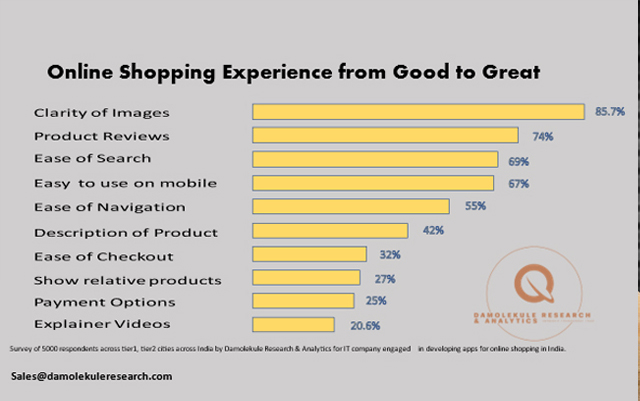
which is making huge inroads into different segments for market research. Online shopping as we all know is a huge trend these days and will continue to grow in future. Insights which were made available to a online shopping site which proved beneficial to improve overall experience which helped company garner more shoppers to shop with them.

Below is the case study for your reference to better understand:

Objective – To improve shopping experience of existing customers

Survey Method – Online market research

Respondent Type – Existing shoppers and Intenders from tier 1 and tier 2 cities from India

Sample Size – 5000 with equal distribution for both shoppers and intenders

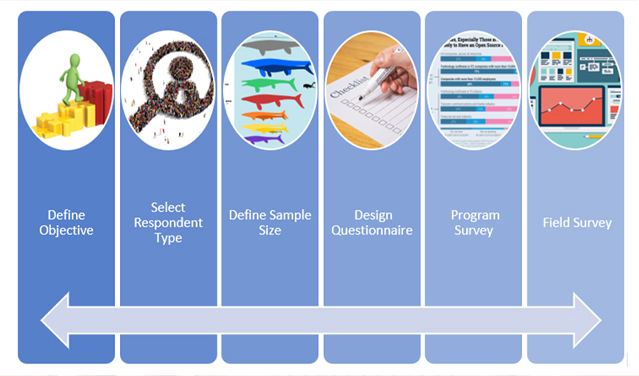
Process of Online Market Research

After field surveys are completed analysis of responses is done to develop insights to present report to client.

Growth of Online Research

Online usage is growing by leaps and bounds specially with the advent of 4G and now 5G mobile internet is going to make things even more interesting from online research standpoint. We are talking about largest growing economy like India where mobile usage is highest in the world and reaching almost remotest part of rural India opening doors for getting to know many consumers who were earlier impossible to reach. Online research is contributing to more than 50% of market research surveys today.

Advantages of Online Research

a) Cost – It is much cheaper compared to physical interviewing process
b) Reach – You can reach wider audience through online interviewing process sitting in your country you can research audiences of different countries at a click of a button
c) Speed – Online market research biggest advantage is speed at which surveys can be obtained, traditionally it used to take months and years to do a large research however with advent of online research similar projects can be finished in month or less.
d) Real time data collection – Data is collected using online panels where everything is happening real time
e) Efficiency – Online market research is very efficient overall be it cost, speed, reach or accuracy.

Challenges

Online usage is growing by leaps and bounds specially with the advent of 4G and now 5G mobile internet is going to make things even more interesting from online research standpoint. We are talking about largest growing economy like India where mobile usage is highest in the world and reaching almost remotest part of rural India opening doors for getting to know many consumers who were earlier impossible to reach. Online research is contributing to more than 50% of market research surveys today.

Is Salt Consumption Bad for Your Health?

Most of us cannot imagine life without salt as during our day we eat lot of produce, which is not natural like chips, sausages, packaged food etc. The amount of salt which we intake thus is much larger than what is actually required and that too without our knowledge.

Salt is essential for Life

Salt is made up of chemical compound sodium chloride and our body needs sodium to regulate our water balance ensuring the proper function of our nerves, muscles and to drive digestion.
Body needs about 1 gm of salt to accomplish these tasks. In other words, if we practice moderation salt is healthy however the bad part is we all exceed our daily limit of salt intake which can make a good thing a bad one.

Survey Report of WHO

According to the World Health Organization (WHO), the limit is a maximum of five grams of salt per day. That’s about one level teaspoon. Challenge here is that we exceed this set daily limit every day, and one needs to be aware of the limits in order to keep one self-healthy. Especially in some countries in east and central Asia, people consume too much salt. In China, the average salt consumption is around 10.9 grams per day — more than double the WHO limit.

Many European countries such as Germany, Portugal and Italy, as well as the United States, Canada, Australia and New Zealand, also exceed the daily guideline. The situation is similar in Latin America — particularly in Brazil, Colombia and Bolivia. Only a few African countries have healthy rates of salt consumption.

High Blood Pressure & Salt

But why does the WHO set this limit of five grams? Studies have shown that if this amount is exceeded, we start seeing negative health effects — especially on blood pressure.
That’s because salt bonds with water. This bonding causes the pressure in our tissues to rise, which can increase blood pressure and lead to a higher risk of stroke or heart attack.

Salt however is not the only reason why people suffer from High Blood Pressure there can be many other reasons such as obesity, lack of exercise, poor dietary habits etc. Furthermore not everyone is salt sensitive as per research only about 1/3rd of population is salt sensitive which means salt consumption has a direct impact on their blood pressure.

With a simple blood test you can find out if you belong to sensitive to salt category or not although this test may be expensive in many countries. People who are not sensitive to salt should also focus on reducing salt intake or should take salt as per daily limit if they do not want to suffer health issues.

Impact on Kidneys

When salt consumption is very high, our kidneys become consumed by the act of excreting the excessive salt. Too much salt also affects the gut microbiome. The number of lactic acid bacteria decreases, while the number of so-called Th17 helper cells in the blood increases. Researchers assume that this interaction causes inflammation and autoimmune diseases. Along with increasing the risk of stomach cancer and bone loss (osteoporosis), salt can even contribute to obesity — it stimulates the appetite, beckoning us to keep eating even when we aren’t hungry anymore.

Salt & its Impact on human life

The WHO estimates that if the entire world population reduced its salt consumption to five grams per day, around 2.5 million deaths caused by strokes and heart attacks could be prevented per year

Steps to reduce Salt Intake

1. Watch out for hidden Salt – 75% of salt is hidden in convenience products that contain lot of hidden salt such as chips, snacks, precooked meals.
2. Use of Herbs – Instead of using salt to flavor try using herbs to give flavor to your food
3. Read the Labels – When buying packaged products watch out and read labels carefully to understand what is going in your body.
4. Reduce it slow – If you are already consuming high salt you cannot reduce it overnight go with a plan and follow it through it is more of habit change than anything

In the end we all need salt however it should be in prescribed quantity and exceeding that quantity once in a while is fine however if it continues over a period of time negative consequences await you and good thing is it is a matter of habit which can be learnt and adopted for lifetime to lead a healthier life.

Buyer Persona

What is Buyer Persona? Buyer persona is a ideal customer who is going to buy your product or service which

What is Buyer Persona?

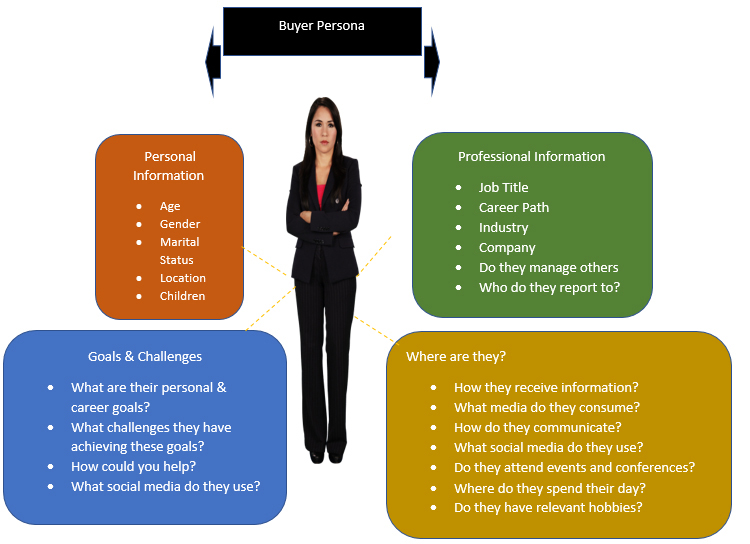
Buyer persona is a ideal customer who is going to buy your product or service which makes them really important in marketing which is why every marketer is interested in understanding what their days are like, the challenges and how they make decisions

It is very common to have multiple buyer personas for a business – for example if there are multiple people involved in making a purchase decision each individual involved in that decision is a separate person. They will have different way of evaluating your product /service and you would need to strategize accordingly.

Buyer personas help ensure that all activities involved in acquisition and servicing your customers are well targeted to buyer’s needs.

When choosing a product or service people gravitate towards businesses they know and trust while this may sound simple it is not which is why every marketer must try and achieve this by showing genuine understanding and concern for the other person – in this case customers. Gaining trust in business requires a subtle, but important shift in which business is presented and at first instance you should be able to show your potential customers that you get them by addressing their pain areas and only then will be exploring you further.

How are buyer Personas Used?

In-depth questions are required to be asked about your ideal customers an exercise like this helps you notice things you have missed or would have missed earlier.

Comparison of your answers alongside your colleagues will help measure any inconsistencies and gaps in your perspectives and foster productive discussions around them. All departments within your organisation can then work with the persona collectively instead just marketing focussing on it which is a great advantage from organisations stand point.

Work Direction can be one super advantage of creating buyer persona for example

To craft a persona, you first need to ask yourself in-depth questions about your ideal customers, and this exercise alone will help you notice things you hadn’t before.

You can then compare your answers with those of your colleagues – this will unearth any inconsistencies in your perspectives and foster discussions to resolve them.

So, one of the immediate benefits of a buyer persona is that it helps you gain customer insights and cross-departmental alignment. This will ensure that marketing, sales, product development and customer support all have the same view of your ideal customer.

You can then use your personas to guide the direction of your work. For instance:

Customer support team can better service customers if they have clear view of buyer persona

Marketing can better target advertisements and other communication to present it to right customer

Sales can better pitch the product or service

New product development can build better product roadmaps

How do I create buyer persona for my business?

You can create buyer persona in 5 simple steps:

  • Step 1: Research your target audience. The first step is to do a little research. …

  • Step 2: Narrow down the most common details. …

  • Step 3: Create separate personas. …

  • Step 4: Give your personas names and a story. …

  • Step 5: Create your marketing strategy.

Apart from above you can also do listing of their fears or negative information to create a more detailed buyer persona

Conclusion

Buyer personas are research-based profiles that represent your target audience and can help you adapt key aspects of your sales and support for greater success. Clarifying the types of people who benefit from your solutions and the challenges you help them solve, is critical to your efforts to attract and retain customers.

Habits which help to Reduce Stress

Healthcare Research

Covid -19 has been overwhelming for hospital systems world over even the most developed nations faced the deluge of patients they never planned for causing multiple people to die as hospitals were not available. One thing top of every mind during and after pandemic is how can I stay safe?.
Question here is how we stay grounded at this time? And how do we help our families to do the same? Damolekule Research has been instrumental in working with various agencies to find out what can help here in current times as well as in the future to come. A total of 10000 surveys across different countries and regions were carried out sending out online invitation to participate to healthy, ailing and extremely fit individuals to find out according to them which top 3 habits formation can help them with staying fit during these times and times to come. These habits are as below:

Setting up Intention

Bring in the focus every morning when you wake up first thing you should be working on think about your intention for the day. What will be the main theme of my entire day. It not only helps you to prioritize but also puts you at the steering wheel. Often it feels like dragging but trust me it really helps you to beat the stress. Your intention might be to focus on your job and make a dent in a project, or perhaps it’s self-care and making calls for doctors’ appointments. Recently, my intentions have been to make progress on a project at work and to be present for my kids. Having a focus or intention helps me have a North Star for the day so I don’t get stuck mentally.

Exercise

Our second priority or daily task is to find 15-30 minutes for physical activity, preferably outdoors. This is because exercise is not only good for our physical health, but it can help our mental and emotional well-being too. If you can do it outside and be in the sun, that is definitely a bonus — sunshine is thought to release serotonin, a hormone that helps mood and focus. Taking a break from your work for even a 15-minute walk can leave you more energized, ultimately helping your mood and productivity. I often go on my stationary bike just for 15 minutes with my fave play list, and I can feel a boost from it.

Gratitude

My third ritual is at the end of the day. And this is to take a moment and just list 1-2 things that I am truly grateful for. I try to be as specific as possible — this takes more thought, and I find that the extra effort pays off. Think about what it is and why you are grateful for it. For example, yesterday, I was very grateful for my room. That sounds trivial, but it isn’t — my room feels like a sanctuary to me, a space where I can think and be creative. Feeling grateful for your home, family, health, or a friend helps us shift from stressed out and negative to a more positive perspective. And this can help our emotional stress levels, especially during this pandemic.

Try these habits on daily basis to beat the stress and stay healthy and if you still have medical issues or conditions do not hesitate to connect with doctor to help diagnose the real problem to provide you with correct medications and help. Do not google your symptoms and do self medication as it only worsens the condition you might be in or you may get into situation more grave than it is already.

Inflation & Its effects on different consumer brands

Inflation is caused by multiple factors and rising inflation is creating a deep dissatisfaction across different regions of the world.

Different Inflation rates across the globe

Varying inflation numbers are being reported from different countries and inflation is a problem across every country in Europe. Latest data shows UK at 5.5% , Germany at 4.9% , Poland at 9.4%
Canada has reported close to 5% inflation whereas US is showing 7.8% inflation as per latest reports.
Asia – Pacific we see Australia at 3.5%, India is trending over 7% inflation, Japan is somewhat sorted however all other major economies are impacted by inflation primarily caused by high fuel /energy costs due to Ukraine war.

How consumers are being impacted

During covid many of the high earning consumers restricted their spends by restricting discretionary spend like travel, eating out, night life and other entertainment.
Inflation however is exerting what we call a slow squeeze which reduces power of money impacting purchasing power of consumers and some of these consumers are in very different positions coming out of the pandemic. Specially those which were working in retail and hospitality industry, the lockdown period was often disastrous. Low earners are already on the edge and price increases are causing their ability to even afford essentials.

Impact Across different categories

Ecommerce & Retail
According to Diana Smith, Associate Director of Retail and eCommerce at Mintel Reports US, the retail industry hasn’t yet experienced the impact of consumer shopping shifts: “Consumers are aware of it and concerned about it but haven’t necessarily adjusted the way they shop. That’s all about to shift though in short order as consumers realize that high costs are here to stay.”
What this is doing is causing consumers to spend less on discretionary spends particularly apparel, beauty and technology companies are impacted. Private labels are more in demand, low cost retailers shopping is up, less commuting, restaurants with takeaways etc.
Travel Industry
The travel industry is facing higher operational costs due to inflation, but there’s still good news for the sector. “Affluent consumers are far more likely to take holidays, and this group is not only less affected by inflation, but also more likely to have increased savings during the pandemic, and with two years’ worth of missed holidays, there is still huge pent-up demand for travel,” according to Marloes de Vries, Associate Director of Travel at Mintel Reports UK.
To rationalize price increases to the consumer, travel companies will need to communicate the value and benefits they offer. In addition, wellness and sustainability have become key priorities for consumers. “Companies that promote experiences around these themes are in a better position to manage price increases,” de Vries stated.
Personal Care & Cosmetics
“During difficult economic times, trading down behaviors are amplified,” according to Roshida Khanom, Category Director at Mintel Beauty and Personal Care. “Perceptions of value have changed, and private-label beauty offerings are much more sophisticated since the last economic downturn. Consumers just have more choice.”
In order to boost demand and bring in more customer loyalty flash discounts, savings on shopping communication is being adopted by many players.
Transparency is the key if the prices are going up explain the consumer reason and rationale behind increase in pricing. Transparency can really drive trust in a brand.
Also adapting conscious consumerism brands can promote sustainability, ethical sourcing and fair play which can increase appeal of these brands to people.
Travel & Tourism
The travel industry is facing higher operational costs due to inflation, but there’s still good news for the sector. “Affluent consumers are far more likely to take holidays, and this group is not only less affected by inflation, but also more likely to have increased savings during the pandemic, and with two years’ worth of missed holidays, there is still huge pent-up demand for travel,” according to Marloes de Vries, Associate Director of Travel at Mintel Reports UK.
In order to attract tourism back governments should create opportunities for the sector by announcing various schemes, Industry can offer discounts on specific days on stays if the occupancy level of hotels needs to be increased.
Food Business
“This is a really challenging situation for brands coming at a time when household finances are under growing pressure from all quarters,” said Kiti Soininen, Category Director of Food and Drink at Mintel Reports UK.
Brands that can demonstrate how their products can be part of an affordable meal can attract consumers. For example, sharing a recipe to swap beef for beans or lentils is not only healthy and sustainable, but also budget friendly. This is a positive way to help people save money without making them feel like they will lose out.